
Bakery Equipment List for Starting a Commercial Bakery in Bangladesh
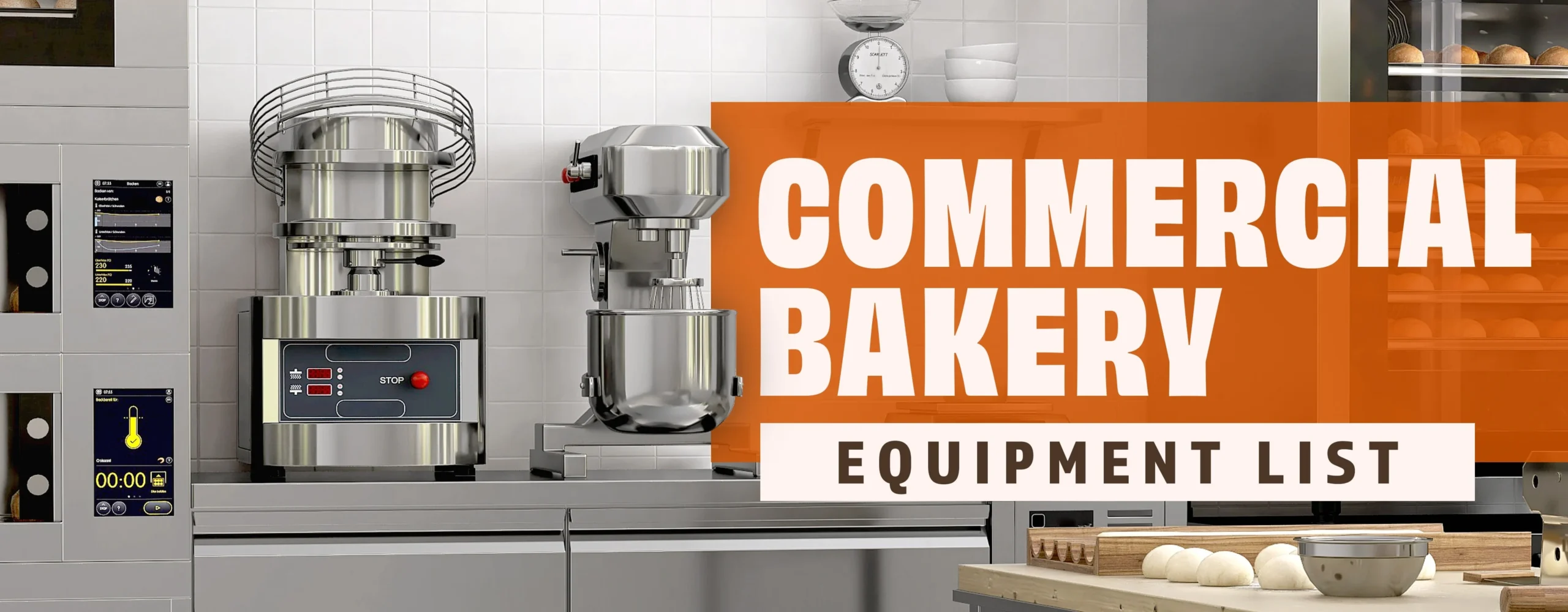
A commercial bakery needs more than an oven and mixer. The equipment list should follow the products you plan to make, batch size, daily output, available space, labor plan, and sales format. This guide organizes the main equipment groups so a new bakery can prepare a realistic project requirement before buying machines.
Quick selection checklist
| Mixing | Planetary or spiral mixers selected by dough type and batch size. |
|---|---|
| Dough preparation | Dividing, rounding, sheeting, molding, or other processes depending on the product range. |
| Proofing | Controlled proofing where yeast products require stable fermentation conditions. |
| Baking | Deck, convection, rotary, or other oven types are selected around the product, tray size, and production volume. |
| Cooling & finishing | Cooling racks, work tables, finishing tools, and space for decoration/packing. |
| Refrigeration & display | Ingredient refrigeration, freezers, and cake/pastry display chillers where required. |
| Washing & storage | Sinks/dishwashing, ingredient racks, tray racks, utensil storage, and hygiene stations. |
1. Define the product range first
Bread, cakes, pastries, cookies, pizza bases, and laminated doughs do not use exactly the same process. List the products, target daily output, batch size, and peak production window. That determines mixer size, dough-processing steps, oven capacity, and labor requirements.
2. Select mixers by process, not only litre capacity
Mixer bowl volume is only one number. Dough stiffness, flour quantity, mixing time, motor duty and attachment type affect practical capacity. For varied cake and cream work, a planetary mixer may be useful, while bread-focused production can require a different mixing approach.
3. Build the dough-processing line around labour and volume
Manual dividing and shaping may be sufficient for a small operation. As production increases, sheeters, dividers, rounders, and moulders can reduce labor and improve consistency. Automation should solve a real bottleneck rather than simply adding machines.
4. Choose oven type around the products
Compare heat distribution, tray size, chamber capacity, recovery time, fuel/electrical supply, and operator workflow. A bakery producing many small batches can need different flexibility from a high-volume bread operation.
5. Do not forget cooling, finishing and display
Finished products need space to cool before packing or decoration. Cakes and chilled desserts may require refrigerated storage and display. Plan this area early so hot production, cold finishing, and customer display do not compete for the same space.
6. Plan utilities and ventilation together
Ovens, proofers, refrigeration, and mixers can create significant electrical, gas, heat, and ventilation requirements. Confirm the site supply, exhaust needs, drainage, and equipment connection points before final ordering.
7. Prepare a bakery quotation brief
Provide a product list, target output, batch sizes, preferred tray dimensions, available floor plan, electrical/gas information, required display/refrigeration, and whether you need only equipment or a complete bakery-production setup.
8. Quotation checklist
For a more accurate quotation, share the intended application, capacity or daily load, required dimensions, operating temperature where relevant, available power and utilities, installation location, project timeline, and any layout or site photos. Clearly state whether you need equipment supply only or installation/commissioning support.
Use Request a Quote for commercial pricing or Talk to an Engineer when the project needs technical review.
Frequently asked questions
What equipment is essential for a small commercial bakery?
The essential list depends on products, but most bakeries need mixing, preparation tables, appropriate baking equipment, racks, storage, washing facilities, and suitable refrigeration. Yeast products may also require proofing.
How do I choose bakery oven capacity?
Work backwards from the target hourly output, tray size, baking time, loading pattern, and product mix. The best oven is the one that supports the required production schedule and utilities.
Do I need every dough machine from the beginning?
No. Mechanize the steps that create the biggest labor, consistency, or capacity bottlenecks. A smaller bakery can begin with more manual preparation and add equipment as volume grows.
What should I send for a bakery equipment quotation?
Send the planned products, daily and peak output, batch sizes, floor plan, utility information, preferred oven fuel/power, and any refrigeration or display requirements.
Need a project-specific recommendation?
Explore Bakery Equipment and Bakery & Food Production, or send GTON your requirement for a technical and commercial proposal.