
How to Choose a Meat Display Chiller in Bangladesh
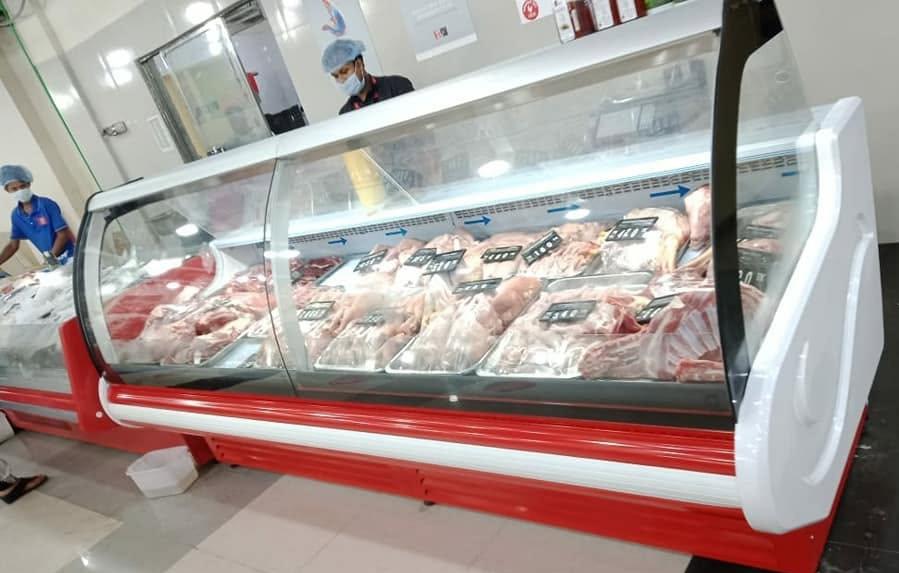
A meat display chiller is both a refrigeration system and a merchandising counter. The right choice has to protect product quality, present meat clearly to customers, fit the available counter line and operate reliably during long retail hours. This guide explains the main questions to answer before requesting a quotation.
Quick selection checklist
| Storage/display temperature | Define the required product temperature and operating setpoint with your food-safety plan. Do not select only from a catalogue label. |
|---|---|
| Display length | Match the counter length to daily merchandising volume, service style and available floor space. |
| Cooling system | Compare airflow, evaporator arrangement, defrost method and how uniformly the display area is cooled. |
| Construction | Check food-contact surfaces, cleaning access, drainage, glass configuration and service-side ergonomics. |
| Refrigeration load | Capacity depends on ambient conditions, product load, door/open-display losses, lighting and operating hours. |
| After-sales support | Confirm installation scope, warranty, service access and availability of routine refrigeration parts. |
1. Start with the product and operating method
Fresh meat, processed meat and packaged products can have different display and holding requirements. Record what will be displayed, how frequently the counter is replenished, whether product arrives already chilled, how long it remains on display and the busiest trading period. This information is more useful than choosing a chiller only by external dimensions.
2. Temperature control matters more than the thermostat number
A displayed setpoint does not by itself prove that all products are being held correctly. Airflow, loading pattern, product depth, ambient temperature and opening exposure all influence real product temperature. Select the equipment around the required product condition and verify performance during commissioning and operation.
3. Choose the display size around merchandising volume
A longer counter can improve presentation but also increases floor-space use, refrigeration load and cleaning area. Estimate the quantity you intend to display during peak hours and provide enough working space behind the counter for staff to replenish, weigh and serve products safely.
4. Review cooling, defrost and drainage
Ask how air is distributed through the cabinet, how defrost is managed and where condensate drains. These details affect temperature uniformity, serviceability and daily cleaning. For high-traffic shops, easy access to filters, drains and service components can be as important as the visual design.
5. Glass, lighting and customer visibility
Curved or straight glass, front height, internal lighting and shelf/display geometry affect how products look from the customer side. Good visibility should not make cleaning or loading difficult. Lighting should be suitable for food display and should not add unnecessary heat to the refrigerated space.
6. Plan installation conditions before ordering
Share site voltage, ambient conditions, ventilation around the condensing section, drainage availability, access route and final counter position. Refrigeration performance can suffer when condenser airflow is restricted or the machine is installed next to strong heat sources.
7. What to send with your RFQ
Send required display length, approximate daily/peak display load, product type, desired temperature, site location, available power, photos or layout, preferred glass style and whether you need supply only or installation and commissioning. This lets the supplier size the system around the real project rather than a generic model.
8. Quotation checklist
For a more accurate quotation, share the intended application, capacity or daily load, required dimensions, operating temperature where relevant, available power and utilities, installation location, project timeline and any layout or site photos. Clearly state whether you need equipment supply only or installation/commissioning support.
Use Request a Quote for commercial pricing or Talk to an Engineer when the project needs technical review.
Frequently asked questions
What temperature should a meat display chiller use?
The correct operating condition depends on the meat product, packaging, display method and applicable food-safety plan. The equipment should be selected to maintain the required product temperature under the actual shop conditions rather than relying only on a catalogue setpoint.
Is a longer meat display counter always better?
No. Counter length should match merchandising volume, floor space, staff workflow and refrigeration load. Oversizing can increase energy use and cleaning work without improving sales.
What information is needed for a meat chiller quotation?
Useful inputs include display length, product type, required temperature, expected load, site voltage, installation location, ambient conditions, glass preference and whether installation is required.
Should I compare only compressor brand and price?
No. Compare the complete cabinet design, evaporator and airflow, controls, defrost, construction, cleaning access, refrigeration capacity, warranty and service support.
Need a project-specific recommendation?
Explore Meat Display Chillers and Display Refrigeration, or send GTON your requirement for a technical and commercial proposal.