
Cold Room Temperature Guide for Meat, Fish, Dairy and Produce
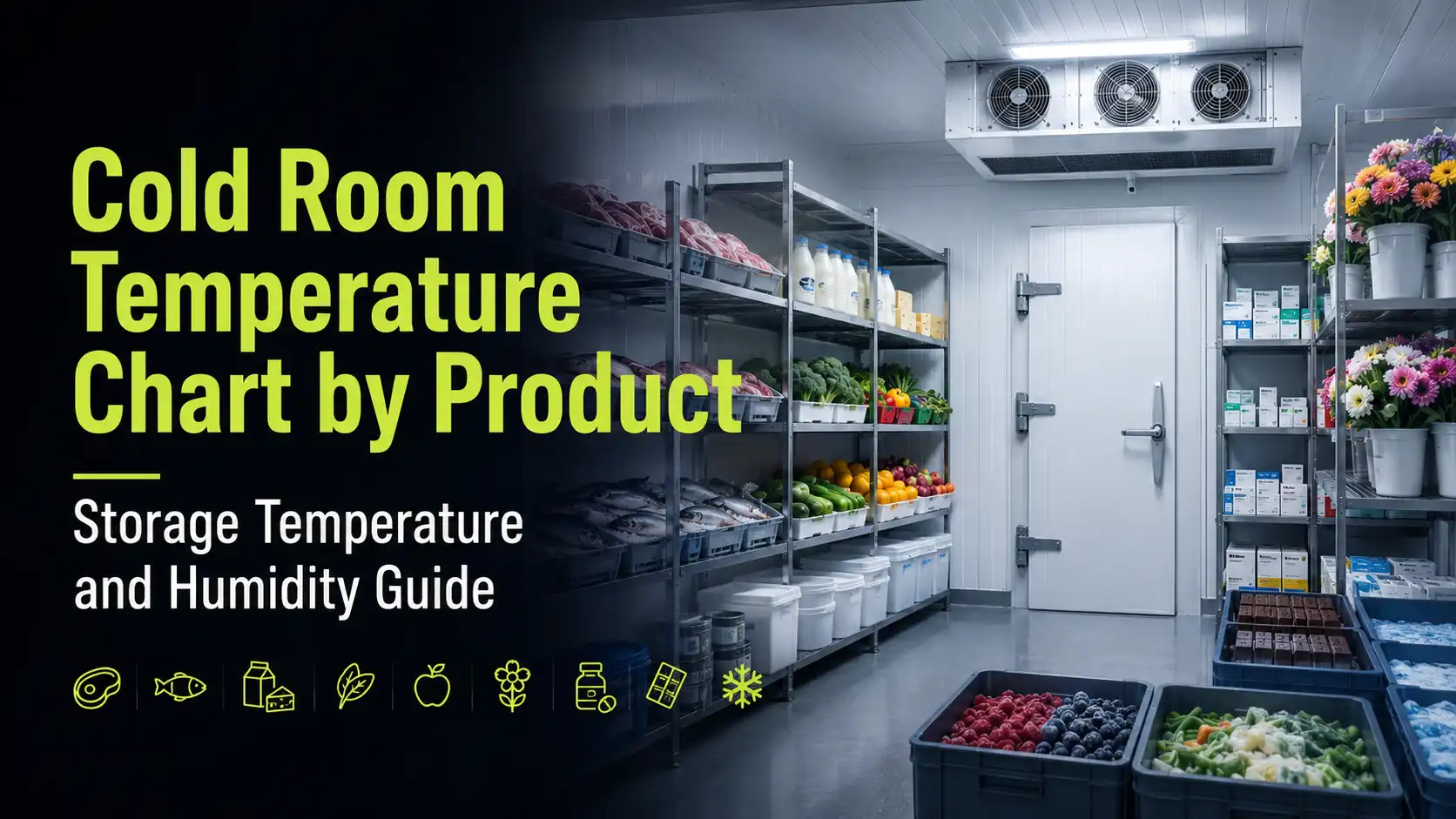
Cold-room temperature should be selected around the product, storage duration, and food-safety requirement—not around a single universal setting. This guide gives practical planning ranges and design questions for common food categories, while emphasizing that the final specification should follow the product owner’s HACCP/quality plan and applicable regulations.
Quick selection checklist
| Fresh/chilled meat | Often planned in a low positive-temperature range close to 0–4°C; the exact requirement depends on the the product, packaging, and process. |
|---|---|
| Fresh fish/seafood | Typically needs very low chilled conditions and strong temperature control; product handling/icing method can change the requirement. |
| Dairy | Commonly stored under chilled conditions, with the exact range based on the product and manufacturer requirements. |
| Fruit & vegetables | Highly commodity-specific; many products use positive chilled temperatures, but some are sensitive to excessive cold or humidity loss. |
| Frozen foods | A common commercial planning target is around -18°C or below for frozen storage, subject to product and regulatory requirements. |
1. Treat temperature ranges as planning inputs, not a legal specification
Food products vary by processing, packaging, and shelf-life requirement. Use the product manufacturer’s storage instruction, HACCP plan, and applicable food-safety rules as the final authority. The examples in this article are for early project planning only.
2. Product temperature is more important than air display
A controller measures air or sensor temperature at a specific location. Real product temperature can differ because of loading, airflow, door opening, and incoming product heat. Commissioning should verify that the room performs under the intended operating pattern.
3. Incoming product load changes refrigeration capacity
A room holding already chilled cartons has a different load from a room receiving warm product that must be pulled down rapidly. Provide daily incoming quantity, incoming temperature, and desired pull-down time when sizing the system.
4. Humidity and airflow matter for quality
Produce can lose moisture if airflow is too aggressive or humidity is poorly controlled, while some products need stronger air circulation to remove heat. Evaporator selection and product stacking should support the stored commodity rather than block air paths.
5. Door usage can dominate real-world performance
Frequent opening introduces warm, humid air and adds refrigeration load. Door size, traffic, strip curtains/air barriers, vestibules, and operating discipline can materially affect room temperature and frost formation.
6. Monitoring and alarms protect the inventory
Use suitable digital controls and consider independent temperature logging or alarms for valuable stock. Establish routine checks, sensor calibration/verification, and a response plan for abnormal temperature.
7. Information needed for cold-room design
Share room dimensions, target temperature, product type, stored quantity, daily incoming load and temperature, required pull-down time, door size/usage, ambient conditions, installation location, and power supply.
8. Quotation checklist
For a more accurate quotation, share the intended application, capacity or daily load, required dimensions, operating temperature where relevant, available power and utilities, installation location, project timeline, and any layout or site photos. Clearly state whether you need equipment supply only or installation/commissioning support.
Use Request a Quote for commercial pricing or Talk to an Engineer when the project needs technical review.
Frequently asked questions
What is the correct cold room temperature for meat?
Many chilled-meat applications are planned close to 0–4°C, but the exact requirement depends on product type, packaging, process, storage duration, and the applicable food-safety plan.
What temperature is used for frozen-food cold rooms?
A common commercial planning target is around -18°C or below, but the final design should follow the product specification and regulatory requirements.
Can fruit and vegetables all use the same cold-room temperature?
No. Produce is highly commodity-specific; some items are sensitive to low temperatures or require different humidity and airflow conditions.
Why does a cold room fail to hold temperature during loading?
High incoming product heat, frequent door opening, restricted airflow, dirty condensers/evaporators, incorrect system sizing, or control/defrost issues can all contribute. A technician should diagnose the actual system.
Need a project-specific recommendation?
Explore Cold Rooms and Cold Room Solutions, or send GTON your requirement for a technical and commercial proposal.