
Restaurant Equipment List for a New Food-Service Business in Bangladesh
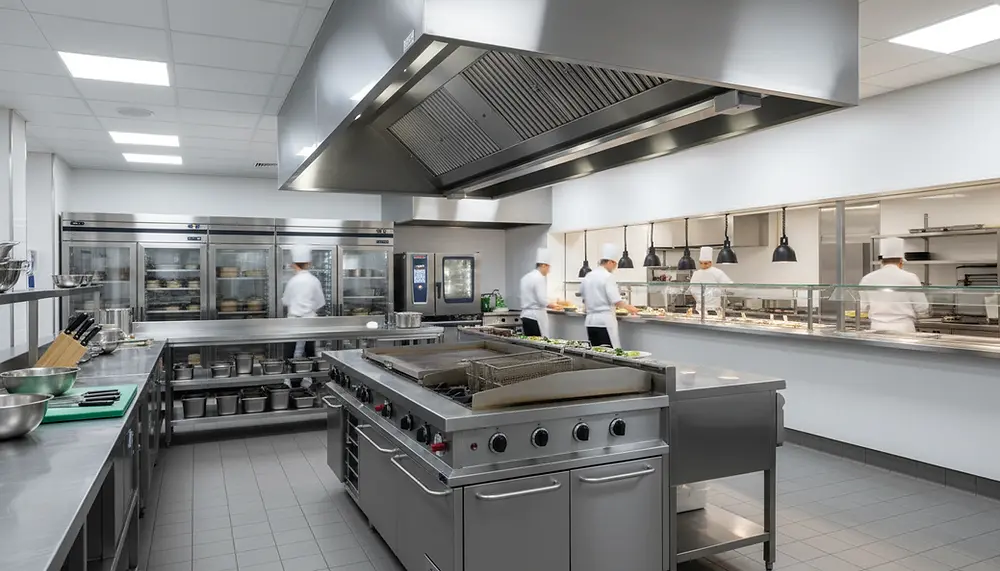
A restaurant equipment list should follow the menu and service model. Buying a standard package can leave critical gaps or fill the kitchen with machines that are rarely used. This startup guide organizes the equipment by workflow so a new food-service business can prepare a more accurate budget and quotation request.
Quick selection checklist
| Receiving & storage | Dry racks, refrigerators, freezers, ingredient bins, and cold rooms were justified. |
|---|---|
| Preparation | Work tables, sinks, knives, processors, mixers, slicers, mincers, and specialty prep equipment. |
| Cooking | Ranges/burners, fryers, griddles, grills, ovens, and menu-specific appliances. |
| Holding & service | Bain-marie, food warmers, heat lamps, pass-through counters, and display equipment. |
| Washing | Dishwashing, pot washing, sinks, pre-rinse, and hand-wash facilities. |
| Beverage | Ice machine, blender, juicer, chiller, and beverage-specific equipment. |
| Utilities | Exhaust, fresh air, gas, electrical distribution, water, and drainage. |
1. Write the menu before the equipment list
Every major menu item should map to receiving, storage, preparation, cooking, holding, and service steps. This reveals which equipment is essential and which can be postponed.
2. Estimate the busiest hour
Equipment must handle peak demand. Calculate covers/orders during the busiest service period, batch sizes, and cooking/holding times. This is especially important for fryers, grills, ovens, rice/cooking equipment, and refrigeration access.
3. Plan cold storage by receiving pattern
Frequent small deliveries need less stock capacity than weekly bulk receiving. Separate chilled and frozen needs, consider raw versus ready-to-eat organization, and decide whether reach-in cabinets are enough or a cold room is justified.
4. Use preparation equipment to remove bottlenecks
Mincers, slicers, peelers, mixers, and processors are valuable when they reduce repetitive labor or improve consistency. Choose capacity around the real prep workload.
5. Do not forget washing and hygiene
Dish/pot washing, hand-wash points, drainage, waste handling, and cleaning storage are essential operating systems, not optional accessories. Lay out dirty returns so they do not cross the food pass unnecessarily.
6. Coordinate ventilation and utilities early
Cooking equipment creates heat and fumes; refrigeration rejects heat; washing uses water and drainage. Confirm hood/ducting, electrical loads, gas, water, and drainage before placing final equipment orders.
7. Create a phased purchase plan
Separate must-have opening equipment from items that can be added as sales grow. This helps control startup cash while keeping the kitchen operational and compliant with the intended menu.
8. Quotation checklist
For a more accurate quotation, share the intended application, capacity or daily load, required dimensions, operating temperature where relevant, available power and utilities, installation location, project timeline, and any layout or site photos. Clearly state whether you need equipment supply only or installation/commissioning support.
Use Request a Quote for commercial pricing or Talk to an Engineer when the project needs technical review.
Frequently asked questions
What equipment does every restaurant need?
There is no universal list, but most restaurants need food storage/refrigeration, preparation surfaces, appropriate cooking equipment, washing/hygiene, and storage and service/holding equipment matched to the menu.
Should a new restaurant buy all equipment at once?
Not always. A phased plan can prioritize equipment required for the opening menu and add secondary machines as volume and product range grow.
How do I choose equipment capacity?
Use peak-hour demand, batch size, cooking/preparation time, storage volume, and expected growth rather than only daily averages.
What should I send to a kitchen equipment supplier?
Send the menu, expected covers/orders, floor plan, utilities, opening timeline, and whether you need supply only or a complete setup/installation scope.
Need a project-specific recommendation?
Explore Commercial Kitchen Equipment and Commercial Kitchen Setup, or send GTON your requirement for a technical and commercial proposal.
01 Comments
Commercial Kitchen Equipment Checklist Bangladesh | GTON
[…] volume, peak-hour demand, available space, utilities, food flow, and service model. This commercial kitchen equipment checklist for restaurants in Bangladesh gives owners, chefs, consultants, and project teams a […]
Comments are closed.